
Regional Climate and Seasonal Patterns
The climate of the region is a primary factor in planning any successful journey. While much of the land is desert, the proximity to the seas creates distinct weather zones — and understanding these variations helps every traveller into Egypt choose the right time and gear for their destination.
Four Distinct Weather Zones Across the Region
Egypt's weather is not uniform. The country spans several climate bands shaped by coastline, river valley, and open desert — each with its own temperature range, humidity profile, and seasonal rhythm. Egypt travelling guides that treat the entire country as a single hot zone miss the detail that matters most to your comfort and safety. What follows is a zone-by-zone reference for planning around the conditions you will actually encounter on the ground.
Northern Coast
Mediterranean influence. Cool rainy winters, warm but sea-breezed summers. The most temperate band in the country.
Temperate / HumidNile Valley
Dry interior heat trap. Summer days frequently exceed 40°C. Winter afternoons are mild, clear, and exceptionally comfortable.
Dry / Extreme RangeDesert
The widest temperature swings. Blistering days can drop near freezing at night, especially in winter. Layers are non-negotiable.
Arid / High DiurnalRed Sea Coast
Year-round warm microclimate. The sea moderates temperature, keeping even winter days mild. Strong coastal winds are common.
Warm / BreezyThe Temperate Edge Along the Mediterranean
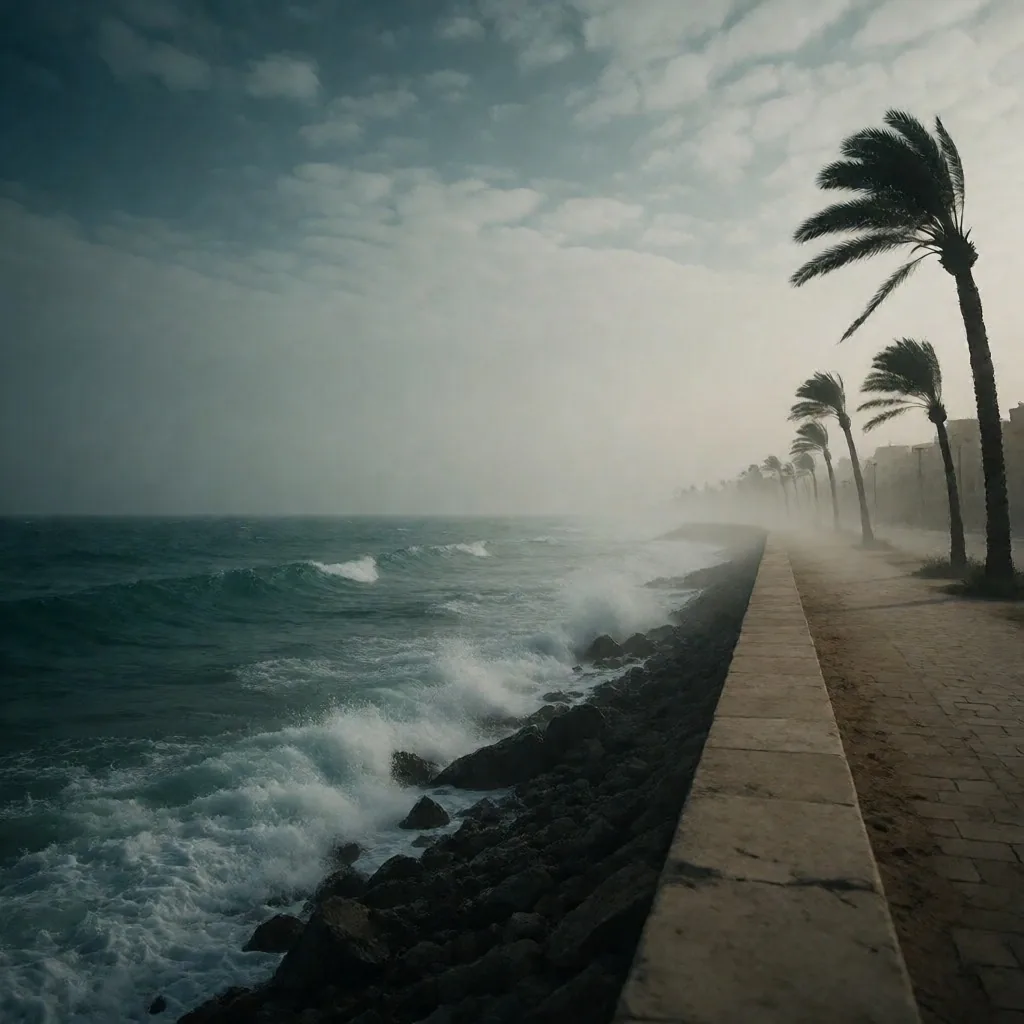
The Mediterranean coast, including areas around the northern ports, experiences a more temperate climate than the rest of the country. Winters can be cool and rainy, while summers are warm but tempered by sea breezes. This zone is ideal for those who prefer to avoid the extreme heat found further south.
During the winter months, from December through February, daytime temperatures along the northern shore often sit between 14 and 19 degrees Celsius. Rainfall is modest by European standards but frequent enough to make a light waterproof jacket a sensible item in your bag. The sea breeze that makes summer bearable here — usually picking up by late morning and settling by evening — is a reliable feature from May through October. Mornings along the promenade can feel still and humid before that breeze arrives, so early walkers should expect a different air profile than afternoon visitors.
- → Winter: cool and damp, 14–19°C, bring a waterproof layer and closed shoes
- → Summer: warm but moderated by afternoon sea breezes, less extreme than the interior
- → Humidity: higher than the south — sweat evaporates slowly, so the air feels warmer than the thermometer reads
- → Best for: travellers who struggle with dry desert heat and prefer a coastal climate
The Dry Heat Trap of the River Valley
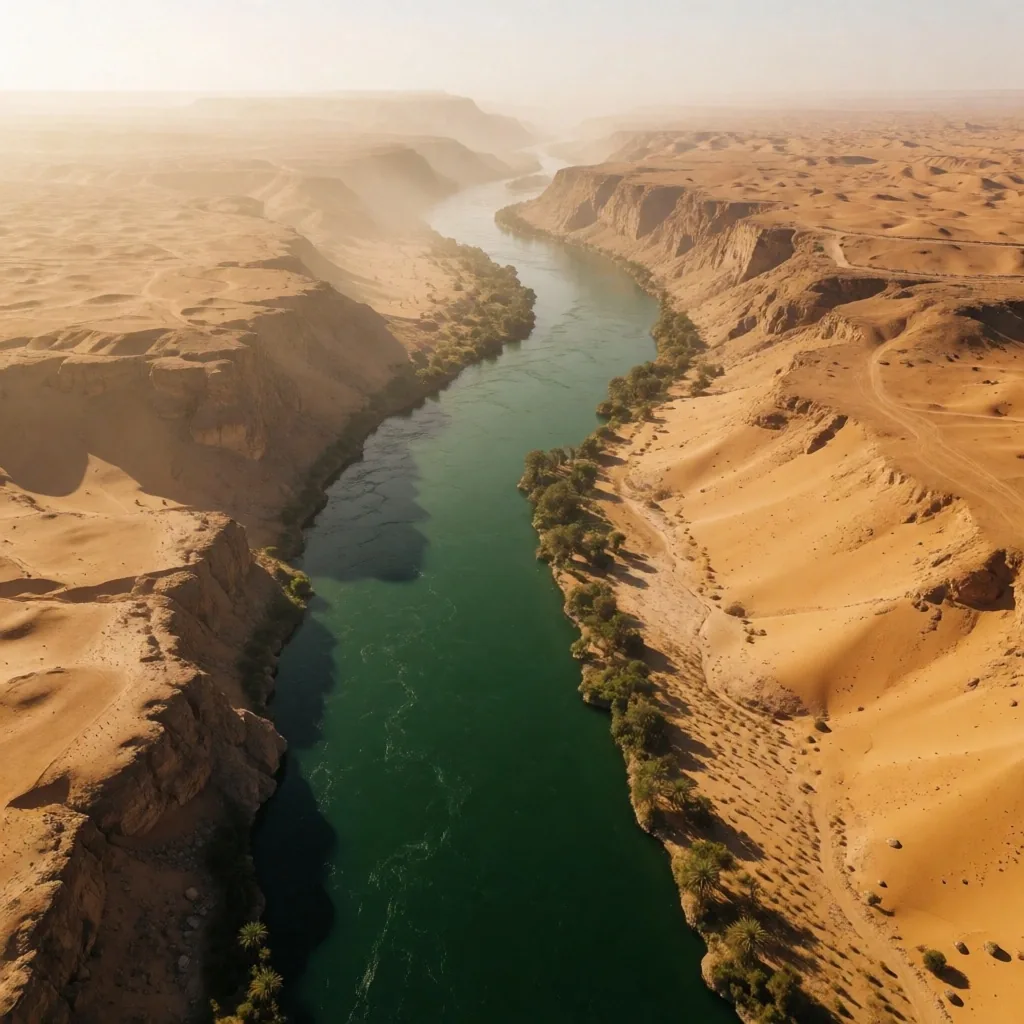
As you move south along the river, the humidity drops and the temperatures rise. The valley acts as a heat trap during the summer months, with daytime temperatures frequently exceeding 40 degrees Celsius. In contrast, the winter months in the valley are exceptionally pleasant, with clear skies and mild afternoons.
The valley's geography explains the extremes. The river cuts through high desert plateaus on both sides, and the surrounding rock radiates stored heat back into the valley floor long after the sun has begun to set. This is why a July afternoon reading of 42°C can still feel like 38°C at 8 p.m. — the stone and sand are still releasing the day's energy. In winter, the same geography works in your favour: the clear, dry air lets heat escape rapidly after sunset, which is why a January afternoon of 23°C can drop to 9°C by midnight. For travellers into Egypt during November through February, this is the most comfortable band in the country — but bring a warm layer for early mornings and evenings.
Daytime often above 40°C. Night stays warm. Limit outdoor activity to early morning.
Daytime 18–24°C, nights can drop to single digits. Clear skies, low humidity.
Rapid Shifts Across the Open Desert
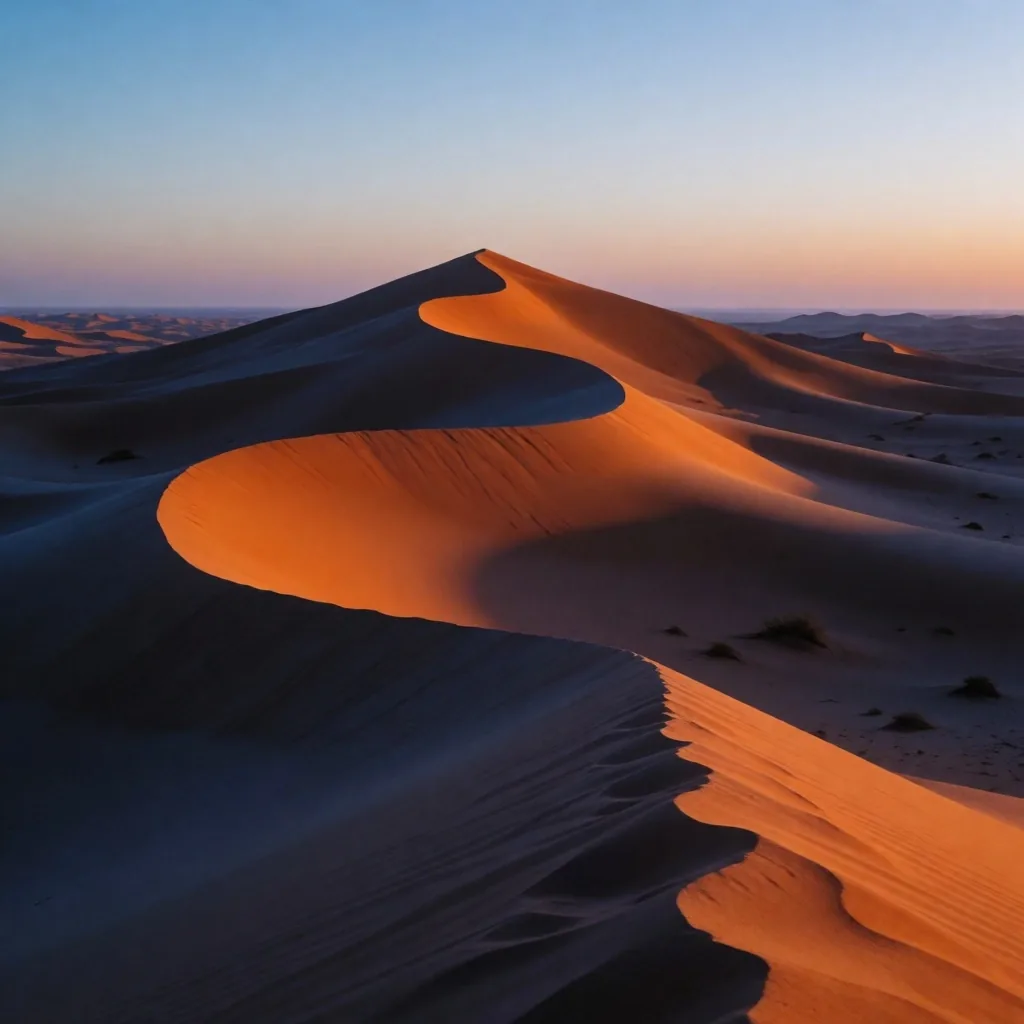
The vast desert areas experience the most extreme temperature fluctuations. A blistering hot day can be followed by a night that drops near freezing, especially during the winter. Anyone planning to spend time near the dunes or in the western oases must be prepared with layers to handle these rapid shifts.
The diurnal range — the difference between the day's high and the night's low — can exceed 25 degrees Celsius in the open desert. Sand and rock have almost no moisture to buffer temperature change, so they heat up fast under direct sun and lose heat equally fast once the sun drops. This is not a theoretical concern: unprepared travellers who set out in a t-shirt and trousers for a daytime excursion can find themselves shivering by 9 p.m. with no warm layer in their bag.
The practical guidance is simple: carry a lightweight insulated jacket or fleece in your day pack regardless of the season, wear moisture-wicking base layers that work in both warm and cool conditions, and never assume the midday temperature will persist past sunset. For overnight desert excursions between November and March, a proper warm hat and gloves are not excessive — they are standard kit.
A Year-Round Warm Microclimate
The eastern coast offers a unique microclimate where the sea provides a cooling effect year-round. This area remains relatively warm even in the depths of winter, making it a popular choice for those seeking sun when the northern parts of the country are cool. The wind can be quite strong here, which is a factor for coastal activities.
Sea-Moderated Warmth
The Red Sea functions as a thermal buffer. Water temperatures stay warm enough that even January air along the coast rarely feels genuinely cold. Daytime readings in winter commonly sit between 22 and 26°C, while summer peaks are softened by the same marine influence — typically 33 to 37°C, noticeably cooler than the interior valley at the same latitude.
Wind as a Constant
Coastal winds here are a daily feature, not an occasional event. They pick up through the morning and can blow steadily through the afternoon at speeds that affect loose clothing, hats, and lightweight equipment. If your plans involve any coastal activity, factor wind into your clothing and gear choices — a windbreaker layer is useful even in summer, and a chin strap for your hat is practical rather than fussy.
Low Rainfall, High Sun
Rain is rare along this coast at any time of year. The dry air and reflected sunlight off the water mean UV exposure is intense — sunscreen and a wide-brimmed hat are essential in every season. The combination of warm air and direct sun makes dehydration easy to underestimate, so carry and drink water more often than your thirst alone suggests.
The Khamsin: Spring's Hot, Dusty Wind
During the spring, usually between March and May, the region can experience the Khamsin. This is a hot, dusty wind that blows from the south, often bringing sandstorms and a sudden spike in temperature. Monitoring local weather alerts during these months is important for avoiding travel delays or respiratory discomfort.
A Khamsin event can raise temperatures by 10 to 15 degrees Celsius in a matter of hours and reduce visibility to a few hundred metres. The air carries fine dust that penetrates ordinary clothing and irritates eyes, sinuses, and lungs. These events typically last one to three days, though stronger sequences can persist for a week. They are not continuous — the wind comes in pulses — but once a Khamsin pattern establishes, it tends to recur over several weeks.
- → Seal windows and doors; use a damp cloth at gaps if dust is heavy
- → Wear a close-fitting cloth or mask over your nose and mouth if you must be outside
- → Carry eye protection — sunglasses with side seals or goggles for prolonged exposure
- → Postpone desert excursions; conditions can change faster than transport can adapt
- → Check local weather updates daily during March–May before setting out for the day
A Strategy for the Peak of Summer
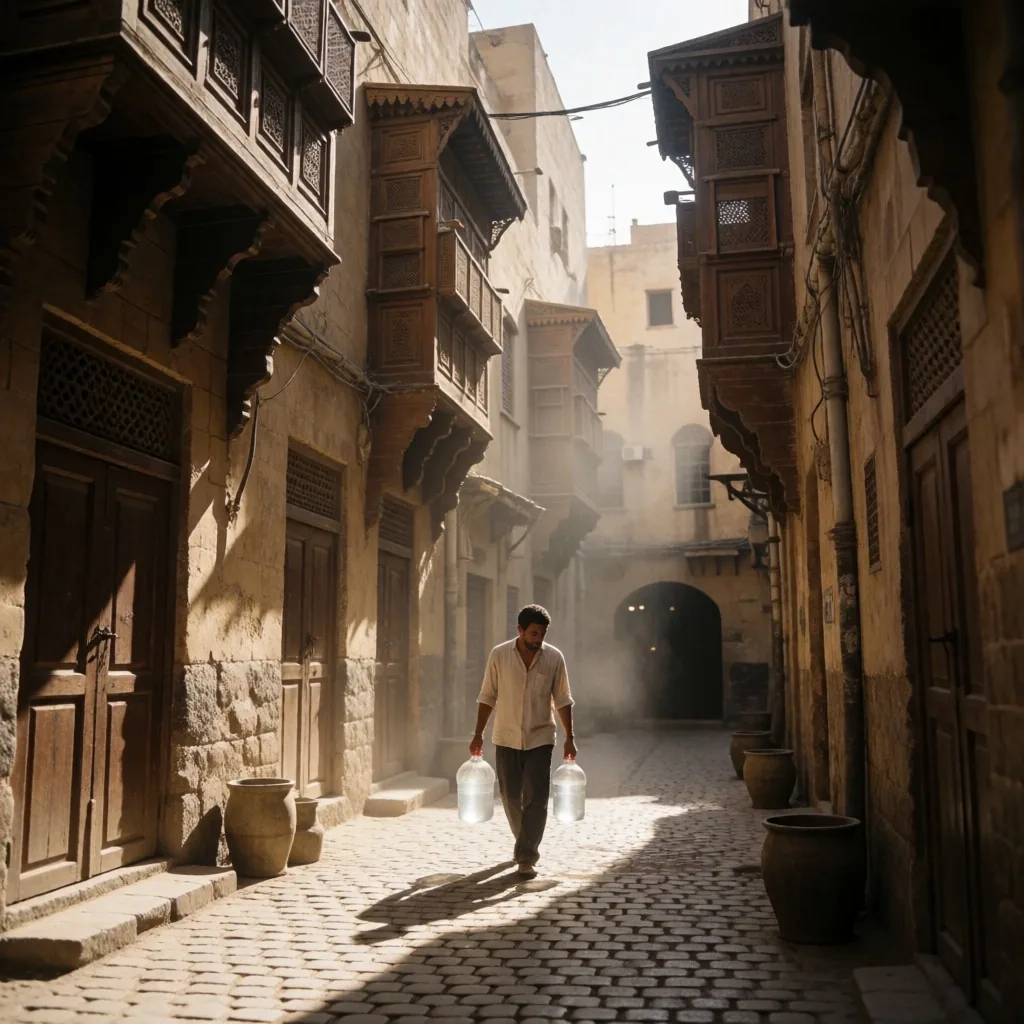
Travelling during the peak of summer requires a specific strategy. Most outdoor activity should be limited to the early morning or late evening. The midday hours are best spent indoors or in shaded areas. Hydration becomes the single most important health factor during this season, as the dry air evaporates moisture quickly.
The practical rhythm for a summer day in Egypt is early start, long midday break, and late resumption. Begin outdoor activity at first light — 5:30 to 6:00 a.m. in June and July — when the air is at its coolest. By 10:30 or 11:00 a.m., direct sun becomes punishing and you should transition to indoor or deeply shaded environments. Resume outdoor activity after 5:00 p.m. when the sun's angle drops and shadows lengthen. This is how local residents structure their day, and travel guides that ignore it lead visitors into avoidable heat stress.
In dry air, sweat evaporates so fast you may not notice how much water you are losing. By the time you feel thirsty, you are already mildly dehydrated. The guidance from travel guides for hot climates is consistent on this point:
- → Drink water on a schedule — at least one full glass every hour during active daytime — not only when you feel thirsty
- → Add electrolytes if you are sweating heavily; plain water alone does not replace what you lose
- → Avoid alcohol and heavy caffeine during peak heat hours — both increase fluid loss
- → Check the colour of your urine as a rough hydration gauge — pale and clear is the target
Winter as the Peak Season
The period from November to February is widely considered the best time for exploration due to the mild weather. The sky is typically a clear blue, and the sun is less punishing. However, this is also when the main regions are most crowded, so a traveller into Egypt should plan for a higher volume of people in public spaces.
The logic is straightforward: comfortable daytime temperatures between 18 and 25°C, low humidity in the interior, and almost no rainfall in most of the country make this the window when conditions are at their most forgiving. The trade-off is volume. The most-visited areas see their highest footfall during these months, which means busier streets, longer queues at key sites, and more competition for accommodation in popular districts. Planning ahead — choosing routes, timing your day to arrive early at major sites, and accepting that some areas will be busy regardless — makes the difference between a smooth experience and a frustrating one.
Mild days, cool evenings, low humidity in the interior, minimal rain. The most physically comfortable window for sustained outdoor exploration.
Higher crowds at major sites, busier transport, and fuller accommodation. Early starts and flexible timing become more important than usual.
Humidity versus Dry Heat: What Your Body Reads
The distinction between the humid north and the dry south is significant for physical comfort. Dry heat is often easier to tolerate but can lead to faster dehydration because you may not realize how much you are sweating. We provide advice on how to recognize the signs of heat exhaustion in both environments.
Coastal Humidity
In the humid north, sweat evaporates slowly. The air feels heavy and warm, and your body struggles to cool itself because the moisture on your skin lingers rather than pulling heat away. The same 32°C that feels manageable in the dry interior can feel oppressive on the northern coast.
- →Heavy, visible sweating with clammy skin
- →Weakness, dizziness, or nausea
- →Cool, pale, or damp skin despite the heat
- →Headache and rapid pulse
Dry Radiant Heat
In the dry south and interior, sweat evaporates almost instantly. You may not feel visibly wet, but you are still losing water — often faster than you realise. The air can feel surprisingly tolerable at 38°C because evaporative cooling is efficient, but the hidden cost is rapid, silent dehydration.
- →Dry mouth and lips, no visible sweat
- →Flushed, hot, and dry skin
- →Confusion, irritability, or disorientation
- →Strong thirst, dark urine, or no urge to urinate
Pair this climate guide with the right preparation
Weather zones are only one half of the equation. The other half is what you carry and how you handle the conditions on the ground. These companion guides pick up where this one leaves off.
What to carry for each zone
A complete packing breakdown organised by climate zone — from humid coast layers to desert-night insulation. Know what belongs in your bag before you leave.
Heat, sun, and staying well
Recognising heat exhaustion, managing sun exposure, and the health practices that matter most in this climate — practical guidance for every traveller into Egypt.
The climate information in this guide is compiled from long-standing regional weather patterns and is intended as a planning reference for travellers into Egypt. Conditions in any given year can vary — heat waves can arrive earlier or last longer, and the Khamsin season does not follow a fixed calendar. Always check current forecasts from a reliable local weather source in the days before your journey.
For questions about specific preparations or seasonal advice tailored to your route, contact our editorial team at [email protected] or call +20227378955 during working hours (Mon–Fri, 9:00–18:00).